Renovations in progress

“How’s the writing going?”
I have a love-hate relationship with this question. On the one hand, it’s great that people are interested in the progress of my book. On the other hand, writing is such solitary, immersive work that it can be hard to explain what I’m doing on a day-to-day basis. I sometimes spend ages struggling with a scene or a character detail, but I don’t think this minutia is as interesting to anyone else as it is to me!
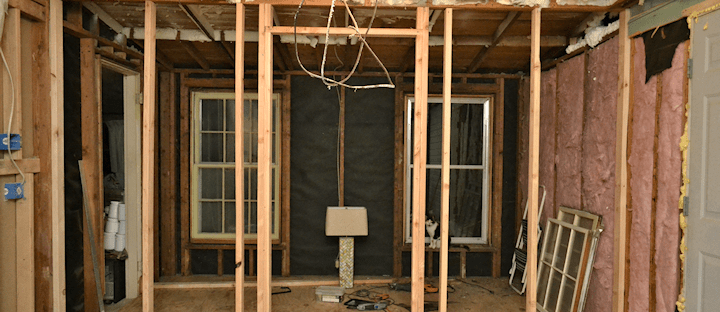
Luckily, we’ve just (finally!) competed six weeks of home renovations, and this has given me the perfect metaphor for this stage of working on my novel.
If you follow me on Instagram, you know that we just remodelled a big part of our second floor: bathroom, hallway, closets and office. Every day for six weeks, workers showed up at 7:30am and spent the next 9 hours hammering, sawing and drilling, along with dozens of other noisy tasks that drove me out of the house. From the beginning, they kept the finished product in mind, tearing out precisely what needed to go, framing new walls and fitting modern fixtures and tiles, so we ended up with a harmonious blend of old and new.
In terms of my writing, the draft I finished last summer has now become a house in need of major renovations. Like a designer/architect, I had to spend several months creating blueprints for my changes, then I jumped in to demolition mode: half the narrative was ripped out entirely, with the remainder set aside for later.
Since March, I’ve been writing new scenes for one of my main characters, gradually rebuilding that missing half of the book. I’m working on one chapter at a time, leaving spaces for the other character’s story in between these new sections. I want to build a strong new foundation for the novel.
Sometimes I’m able to reuse an old scene or description or moment from my last draft, but it usually needs to be shaved down or rearranged. Just like with our house renovation, I’m trying to be thrifty and smart with my time and energy, recycling and adapting when I can.
I’ve now reached nearly 15 000 words on this new draft; the work is going slowly but so far everything is fitting together well. I’m aiming for a finished draft of 90 000 words this fall; it’ll be much shorter but hopefully much better than last year’s draft of the book. Then I’ll be ready to revise the finer points of writing, just like workers leave baseboards and finishing touches for the last stage of renovations.


Progress update

Greetings from Southern Ontario! I’m currently on vacation, staying at my parents’ cottage near Collingwood. My kids have March Break this week, so we’re here for a week of skiing at Blue Mountain.

Although I’m not writing this week, I’ve started 2018 off right by getting back to work on my novel. I’ve nearly finished a 6-week online UBC course, called “How to write a novel: Edit and Revise.” This has included video lectures, assignments and practical suggestions for how to analyze and prioritize all the changes I need to make in my book for this next draft.

Accordingly, I’ve spent the last few weeks unraveling all the narrative strands from my last draft and examining each character and story arc; some beloved characters and scenes had to be ripped out in order to strengthen the overall book, but most of the main plot points remain intact. I’ve been working on character development and backstory, transferring my scene ideas onto cue cards and laying out various plot lines to make sure they intertwine in a balanced way. I’ve probably got another couple of hours of this type of planning work before I feel confident that my novel’s framework is solid. Then I can transfer this new outline into Scrivener, ready to expand into written-out scenes.

Since I’m a highly impatient person, I keep wanting to skip all this planning and dive straight into drafting new pages! One thing that’s held me back, though, is the technical debate on what kind of tense to use for each of my two main characters, Helen and Anna. In my last draft, Helen’s story was told with a first-person past tense voice (with a little second-person flair that’s definitely gone for this next version); Anna’s story was written in third-person present tense. My question now is: do I change these voices? My beta readers told me that using first-person for Helen “anchored” my book with her, but I’m also aware that Helen was a much more developed character in that last draft. Now that I’ve done lots of work to understand and develop Anna, should I also write her scenes using first-person? Or should I change Helen’s scenes to third-person? Should I keep Anna’s parts in present tense, to emphasize the impulsivity of her character? Or should I streamline the voices for both main characters?

Decisions, decisions. I wish there was a clear path forward! I think I’ll just try out different options as I draft my new scenes, and see what feels most natural.

In other news, my story “Foreign Bodies,” which won the Malahat Review’s Open Season award in 2017, has been nominated for the 2018 Journey Prize. This is a prestigious $10 000 prize for the “Best Short Story” published in a Canadian literary magazine by an emerging writer. Obviously, I am utterly thrilled with this nomination! I should hear by May if my story has made the long list for the prize.

I’m also waiting on news for the Quebec Arts grant I applied for in December, and I’ve submitted various short stories to literary magazines and contests. It’s strange to think about all these decisions being made on my work by different juries and editors while I’m at home on my own, inching my way through progress on my novel.

Project description

Happy new year!

It’s been nearly six months since I completed a draft of my novel. As thrilled as I was to finish that draft, I always knew there was lots more work ahead. Sure, I’d planned out a scene-by-scene outline and followed this faithfully, but that didn’t mean I ended up with a polished manuscript. When I sent the draft out to a handful of readers, I asked them for constructive criticism: what was working? What did I need to fix?

Some of their feedback was very positive. They told me that the overall story worked well, with compelling characters and conflicts. There were lots of areas to improve, though: Inconsistent pacing. Too many secondary characters. One protagonist more developed than the other. The whole draft was hampered by too much explaining, too much backstory, too much “scaffolding.”

All of this is true. I reread the draft this fall, taking my own notes. There’s lots of work to do. I feel as though my finished draft was a jigsaw puzzle, and now I need to pull the whole thing apart and examine each piece to see what should stay and what should go. Ultimately, I’ll need to rebuild the puzzle to create a new and improved draft.

Where to begin? Well, first of all, I applied for an arts grant. Now that I’ve published a few stories, I’m eligible for an “emerging artist” grant from the Conseil des arts et des lettres du Québec.  I’ve never written a grant proposal before, so it took me weeks to put together the application. I had to submit a writing CV, a portfolio of my work, and a project description; not just a plot summary for this next draft, but an artist’s statement of intent. I had to examine my own motivations for writing this book and justify the project: why this book? Why me? Why now?

It was all very intense, but I got it done and submitted my application in December. Now I have to wait until March to find out if I’m successful. Cross your fingers, please!

In the meantime, I’ve started planning my revisions for this next draft. I’ve organized my notes and feedback into categories for various characters and subplots, and I’m doing a lot of free writing to explore and connect my ideas.

I’ve also signed up for another of UBC’s online courses, which starts next week. This one is called “How to write a novel: Edit & Revise.” Perfect timing, right? Stay tuned to see how it goes!

P.S. In case you didn’t see my posts on social media, I’ve had another story published! I wrote “Click Bait” nearly two years ago, but it’s just appeared in the latest issue of Hamilton Arts & Letters. If you read it, I’d love to know what you think!

The productivity trap

What is productivity supposed to look like?

Last year, that was an easy question. I had my daily word count goals, my scene outlines to follow, my printed-out chapters and my regular writing routines. All those metrics provided concrete evidence that I was moving towards my goal, and those hundreds of hours and thousands of words added up to me finishing the draft of my novel “on time” this summer.

Now, though? When people ask “how’s the writing going?” it’s harder to answer.

See, I’ve been focusing on short stories for the last couple of months. Daily count goals don’t apply when I’m putting a story together, since it takes multiple weeks and multiple drafts to write and polish a story that’s less than 3000 words. Measuring the number of hours I spend at my desk is also meaningless, since I’m often working through ideas or recording snippets of dialogue while I’m out for a walk or doing things around the house.

I can say “I submitted a story to a contest!” but that reduces all my work to that one tiny moment of pressing “send.” Or I can say “I had another story accepted by a literary magazine!” (which is true–hooray!) but publication is one part of writing that’s almost completely out of my control.

I like tracking my progress. I like checklists and numbers and schedules. I just think I need to loosen up a little on my goals and expectations. I’m still working hard, but for the sake of my sanity, I need to stop trying to “prove” that I’m being productive every day.

More and more, I find myself rebelling against the idea that productivity needs to be a constant. Maybe it’s ok if I work in fits and starts. Maybe I should factor in time to read and reflect, to knit and cook and daydream. Maybe I should even (gasp) take a day off, now and then.


Getting back to work

September. The leaves are starting to change, the kids have gone back to school, and I’m getting back to writing. If you follow me on social media, you know I had an eventful summer. My brother got married! We went to Ireland and England! A tree fell on our house during the NDG micro-burst! A great summer with an unfortunate ending.

So, what have I been up to, writing-wise?

At the end of July, to very little fanfare, I finished the draft of my novel. Yes, I really did. I printed it out, all 320 pages, and sent off copies to a small handful of beta readers, then I turned my attention to other things. I wrote my first professional book review for the Montreal Review of Books. I also learned that another of my stories has been accepted for publication, over at the online journal Hamilton Arts & Letters.

Now that summer is over, I’ve been trying to reestablish a writing routine. I’ve been working on some short stories, revising a piece to submit to a literary contest as well as drafting something brand new. I’m making progress with both, although I miss the structure of my 1000-words-per-day novel writing.

Which brings me to the next item on my to-do list: rereading the draft. I still haven’t actually read the book since I finished writing it! I definitely don’t want to start revisions until I’ve received feedback from my beta readers, but I think it’s time I sat down and looked over what I’ve accomplished so far. I know there’s still lots of work to be done, but I’m ready to get started with this next phase.