Looking professional

Being a writer isn’t always about writing. It’s not enough to be an artist; you also need to present yourself in a professional way.

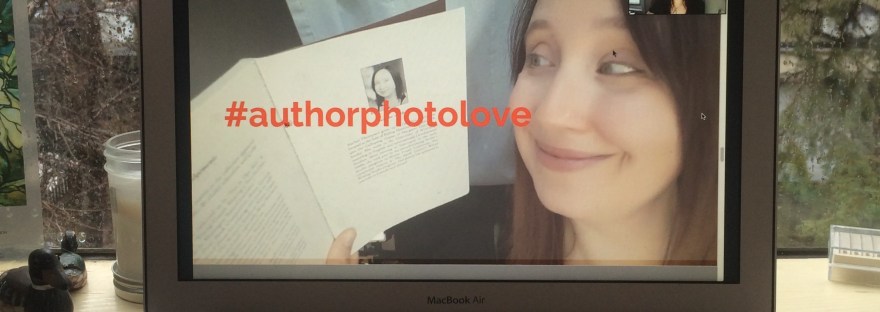
With this in mind, I signed up for a free online workshop called “Love Your Author Photo.” It was put together by writer/editor Rachel Thompson and photographer/activist Vivienne McMaster, and it was all about choosing and/or creating a professional author headshot.

Why should I worry about this now, long before my book is finished, let alone on its way to publication?

Well, when my short story won the Malahat prize, they asked for my headshot… and I didn’t have one! Luckily, I was visiting my brother, who’s a talented amateur photographer. We went out to his apartment’s parking lot, where he took about 30 pictures of me with my phone. I ended up picking one of these for the magazine, which you can see here along with my interview. I look happy and relaxed but a little rumpled. It’s a nice picture, but does it work as a professional headshot?

During yesterday’s webinar, both Rachel and Vivienne provided tons of supportive, positive suggestions for taking better pictures and becoming more comfortable in front of the camera. They addressed the vulnerability that comes with putting a photo of yourself out into the world and gave strategies for circumventing the inner critic.

The idea that really stood out for me was that my professional headshot needs to represent me as a writer, not just me as a person. As a human being, of course I want to look friendly, attractive and likable in pictures. But are those the most important qualities in my writing? I should really be using a photo that hints at the style, energy and authenticity of my work.

Thanks to this webinar, I’m resolving to take more selfies and to be braver about sharing these with the world. You can already check out my Instagram feed for some of the pictures I took yesterday during the workshop. One day, I’ll hire an expert photographer to take a more professional portrait of me. In the meantime, though, I’ll experiment with ways to represent myself and my work visually as well as through the written word.
 

Crisis of confidence

This has been a tough writing week.

I’ve reached the midpoint of the story for one of my main characters, and I’ve been looking forward to writing these scenes. This part of the book is set at Hillside, an outdoor music festival held every summer in my hometown of Guelph. It’s a great setting and I want these scenes to be vivid, exciting and dramatic.

Instead, they feel flat. Uninspired. Cliché, even. I type a few lines, then erase them. I’ve gone back to previous versions of the scene and mined these for usable material, but I’m struggling to fit it all together in a way that moves the story forward.

It gets worse: my difficulty with these scenes is making me question the big picture. Maybe I’m having a hard time because this character isn’t plausible. Maybe none of the plot is working and I’m just realizing that now. Maybe this whole book is an awful mistake.

These are not helpful thoughts.

This whole project requires that I sustain confidence in my ideas, my plot and my characters, as well as in my ability to write this story. When my confidence gets shaky, the whole venture starts to seem insane. Who am I to think I can write a novel? I’ve never done this before!

I’m not about to give up on this draft just yet; I keep reminding myself that many of these scenes are just shitty first drafts which I can revise and rework or even delete if necessary if they aren’t working. “How bad can this be?” I ask myself.

I guess we’ll find out!

I’ve made a deal with myself: don’t look back. Move forward. Follow the outline; write as well as you can, but try to maintain the momentum even when it feels like it’s not going well. Once this draft is done, I can be critical. For now, it’s full steam ahead.

Recycling

I wrote more than 7000 words this week!

Well, ok, that’s not quite true. My draft grew by more than 7000 words, but I recycled several scenes from previous versions of this book. I don’t mean copy-and-paste; I did some light editing and a fair amount of revision to make my old scenes fit into this new draft. Still, there are whole paragraphs that survived the transition nearly intact.

I have mixed feelings about this.

On the one hand, if I’d already written and polished a scene in a previous iteration of this book, isn’t it logical to reuse it instead of rewriting a nearly-identical scene from scratch?

On the other hand, the whole point of the draft I’m currently writing is that my old versions of the book didn’t work. I went off on a lot of tangents and was lacking a tightly-strutured plot. It seems easier now, but maybe reusing old scenes is just putting a bunch of extra, unnecessary words into this draft, which I’ll just end up cutting later. I’m already at 65 000 words and I’m only half-way through the story, so I certainly don’t want any scenes to be longer than necessary!

When I started working on this draft of my novel, I intended to write the whole thing over from the beginning. I knew I’d be keeping some of the same events and scenes, but they were often positioned earlier or later within the narrative, and I planned to change some key details. By starting from scratch, I figured I could maintain momentum and help ensure that the whole novel held together, as a whole.

I tried. Really, I did. But I couldn’t resist going back and looking at previous versions of scenes, and sometimes those earlier versions were pretty good! At this point, I’ve adopted a fairly pragmatic attitude about recycling images and scenes from my old work. This draft is a palimpsest, the new scenes mingled with the old. Hopefully I’m succeeding at fusing them all into a coherent whole.


Alone again

I’m incredibly grateful to have so much time to work on my novel. There are lots of wonderful aspects of working at home: I can set my own schedule, wear whatever I want, talk to myself (or my cats) without anyone judging me. My creativity has an outlet and a framework. I am lucky to be able to spend my days perched at my desk in my little office, typing away on my laptop.

But —

(You knew that was coming, didn’t you?)

It gets lonely.

When I was teaching, I used to sit in the staff room and drink coffee with other people. We’d fill out the daily crossword, make each other laugh, chat about work and life.

Now I go downstairs to my kitchen to make coffee, then drink it all by myself. I sit at my table, read the paper and work through the crossword and the sudoku, all alone.

Sometimes I reach out and share some thoughts on Instagram or Twitter. I’ll scroll through Facebook, looking for a virtual community, but social media often makes me feel even more lonely and inadequate.

I know, I know: I signed up for this. The writing life is inherently sedentary and solitary. The downside to giving up my day job is that I miss out on all the little social interactions that go along with having colleagues and coworkers.

Anyway, it’s not that bad; I’m only alone during working hours. My husband’s office is nearby and he often comes home for lunch. My three kids keep the house bustling when they’re home from school. I’ve got lots of friends and an active social life.

This isn’t a problem that can be solved, just a wistful observation. I’m living the dream, but even an introverted writer gets lonely sometimes.


Shifting gears

My goal this week was to write 4000 words on my novel. How many did I produce? Less than 2000.

What went wrong?

Well, last weekend was extra busy, since I had to spend time on some interview questions for my contest win at the Malahat Review. Also, Eric was away for a few days, and single parenting is obviously a lot more work. So I started the week already tired.

Monday was great; I wrote 1200 words. Then I hit a wall. On Tuesday and Wednesday, I wrote a grand total of almost 700 words, and each sentence was painful and difficult. I felt scattered, exhausted, discouraged.

My kids have March Break next week and I knew they’d be home this Friday (today) for a P.Ed. day, so I felt a lot of pressure to make Thursday count, especially after those two crappy writing days in a row.

But instead of forging ahead, I stopped. Reconsidered. I thought about how much effort it would take for me to get into the right headspace to work on my book, only to put the laptop away for the following 10 days. And I changed gears.

Instead of opening my draft in Scrivener, I pulled up a short story and worked on that. It felt fantastic! I was reenergized, able to focus, produce solid work and even enjoy the writing process. By the end of the day, I had a solid draft to send out for feedback from my writing group, which meets in mid-March. Sometimes a change is as good as a rest.